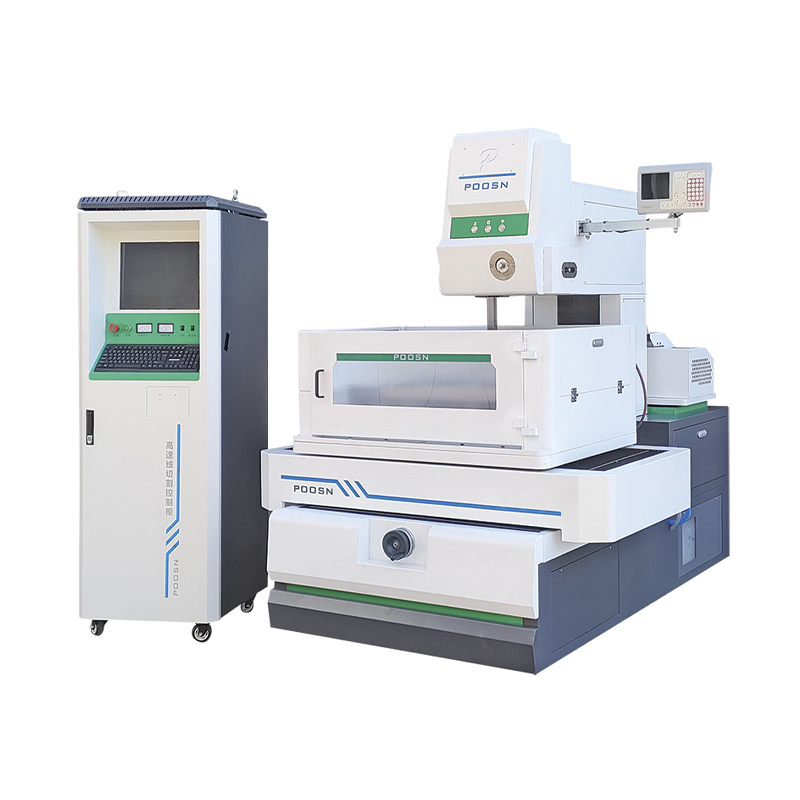
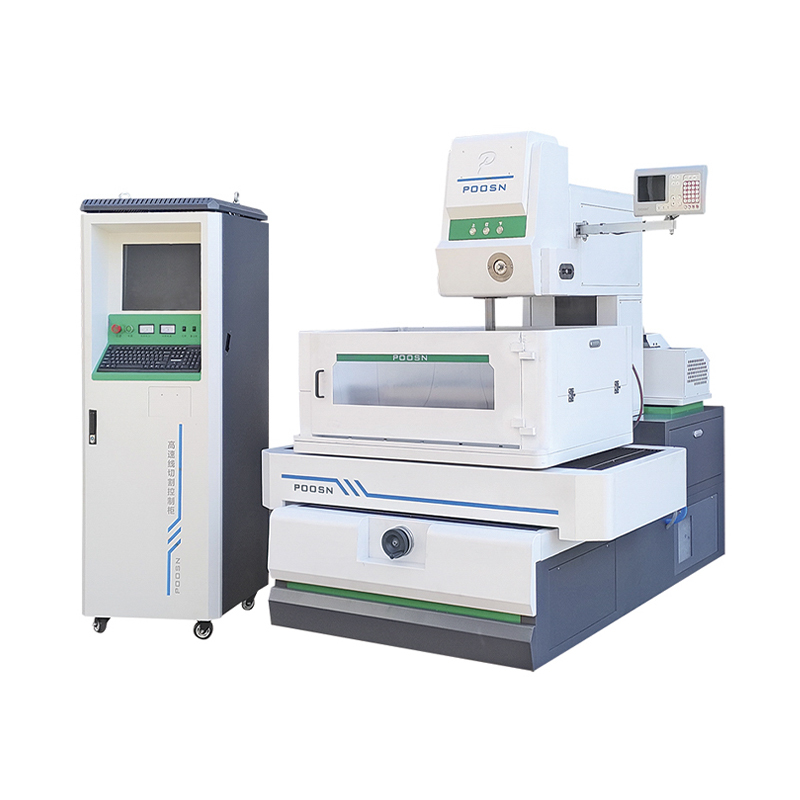
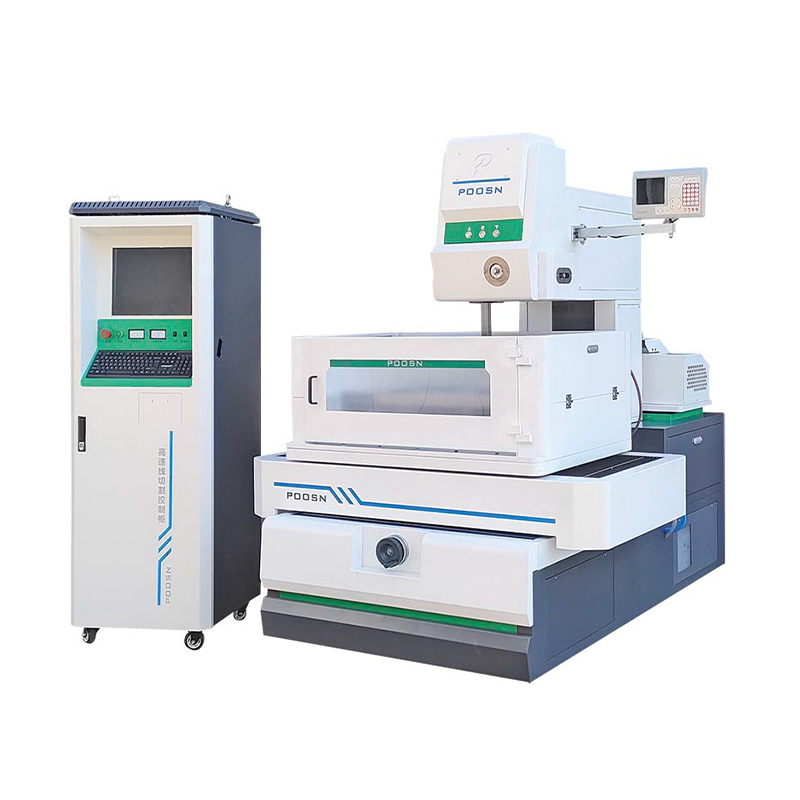
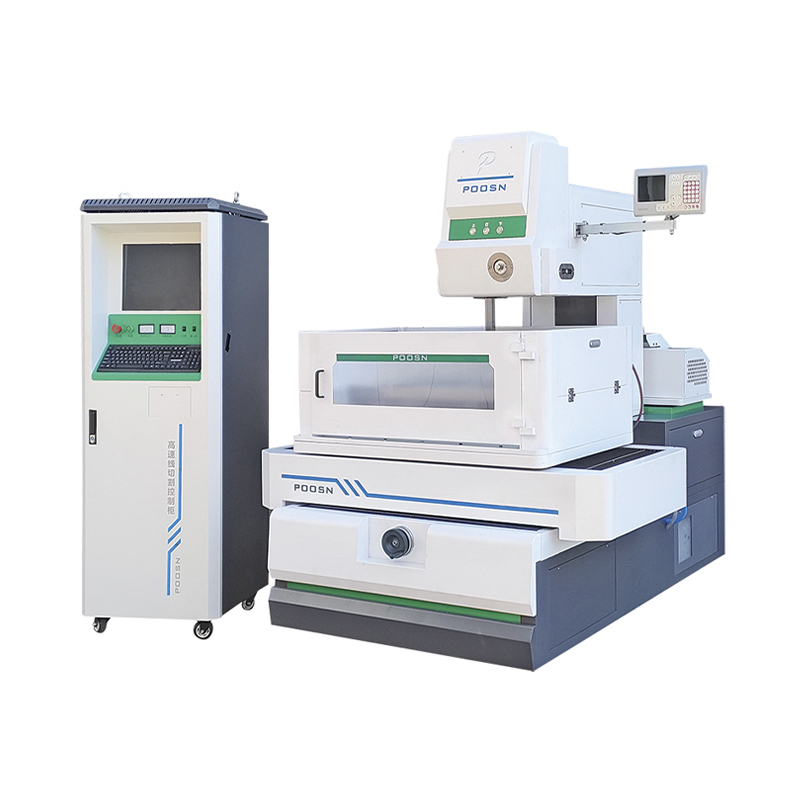
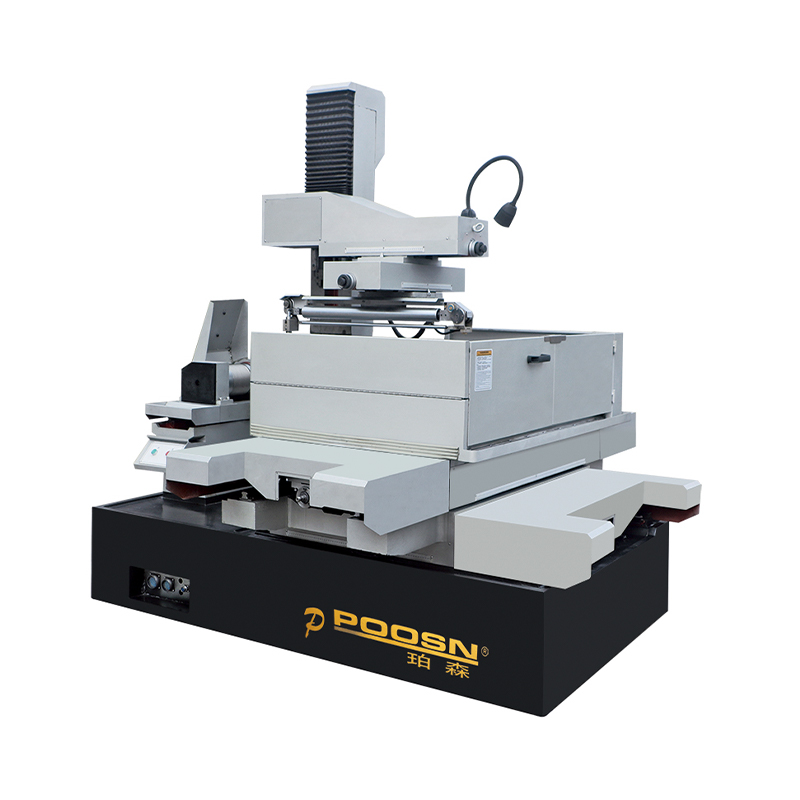
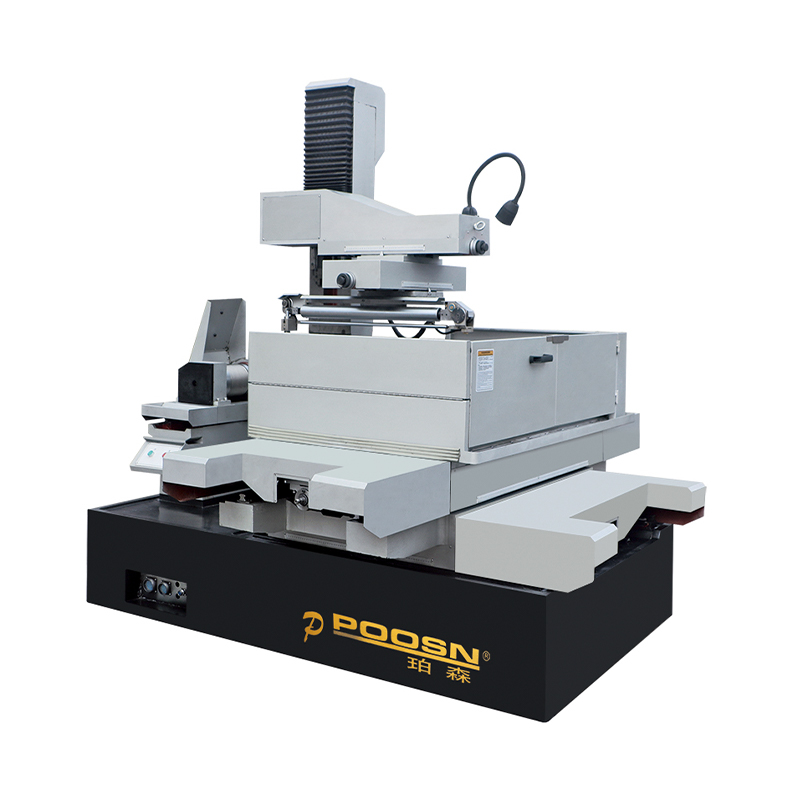
Wire EDM (Electrical Discharge Machining) is a precision subtractive manufacturing process that uses a thin electrically charged wire — typically molybdenum or brass — to cut conductive materials with extreme accuracy, achieving tolerances as tight as ±0.002 mm. Unlike conventional cutting tools, the wire never physically contacts the workpiece; instead, controlled electrical sparks erode the material. This non-contact mechanism makes wire EDM machines indispensable for machining hardened steel, carbide, titanium, Inconel, and other materials that are difficult or impossible to cut with traditional methods. Whether you are in mold manufacturing, aerospace, automotive, or medical component production, CNC wire EDM machines deliver the dimensional precision that modern industry demands.
The global wire cutting machine market has expanded rapidly, driven by demand for high-tolerance parts in sectors ranging from semiconductor tooling to large-angle taper die manufacturing. China wire EDM manufacturers have become key players in this supply chain, offering industrial-grade precision at competitive quality levels. Companies like Taizhou Xinchengyang Machinery Manufacturing Co., Ltd. produce a broad portfolio — from economic high-speed WEDM machines to advanced medium-speed CNC wire EDM systems — enabling buyers worldwide to select the right solution for their production environment.
The chart above illustrates the distribution of wire EDM machine usage across major industries. Mold and die manufacturing accounts for the largest share at 28%, reflecting the technology's critical role in shaping complex cavities with tight tolerances. Aerospace follows at 22%, where precision EDM wire cutting is essential for turbine blades, structural brackets, and fuel-system components that require repeatable accuracy under extreme operating conditions. The automotive sector (18%) relies on EDM wire cutting machines for punch dies, gears, and sensor housings. Medical applications (14%) demand absolute surface quality for implants and surgical instruments, while electronics (10%) increasingly requires micro-level features achievable only through high precision EDM machines. The remaining 8% spans tooling, research, and other advanced manufacturing domains, confirming that wire EDM is a genuinely cross-industry technology.
How Wire EDM Works: The Science Behind Precision Cutting
Wire EDM operates on the principle of controlled electrical discharge. A spool of thin wire — commonly 0.1 mm to 0.3 mm in diameter — is fed continuously between two guides while a dielectric fluid (usually deionized water) floods the cutting zone. A pulsed DC power supply generates rapid spark sequences between the wire and the workpiece. Each spark vaporizes a microscopic amount of material, and over thousands of pulses per second, a precise kerf is eroded through the part. Because the wire is always moving and never dulls, cutting quality remains consistent from the first pass to the last.
The CNC control system governs the X-Y (and optionally U-V) axes simultaneously, enabling the machine to produce complex contours, sharp internal corners, and tapered profiles that would be impossible with rotary cutters. Modern CNC wire EDM machines achieve surface roughness values as low as Ra 0.4 µm and positional accuracy better than ±0.003 mm, meeting the strictest engineering drawings. The servo wire EDM principle — where gap voltage feedback continuously adjusts feed rate — further stabilizes the discharge and prevents wire breakage, extending unattended run times and reducing scrap rates.
Two broad technology tracks exist: high-speed (reciprocating) wire EDM and medium-speed wire EDM. High-speed WEDM, also called fast wire EDM or molybdenum wire EDM, recirculates the electrode wire at speeds of 8–12 m/s, making it an economic wire EDM machine option for general-purpose cutting. Medium-speed wire EDM incorporates multi-cut strategies and finer pulse control to approach the surface finish and accuracy of slow-wire (brass-wire) systems at a fraction of the cost, making it the preferred choice for precision mold wire EDM and high-accuracy die manufacturing.
The column chart above compares high-speed WEDM and medium-speed wire EDM across three critical performance dimensions scored out of 10. High-speed wire EDM excels in cutting speed (9/10), making it the preferred economic wire EDM machine for high-volume, moderate-tolerance work such as rough die cutting and structural profiling. However, its dimensional accuracy (6.5/10) and surface finish (5.5/10) scores reflect the trade-off inherent in reciprocating wire systems. Medium-speed CNC wire EDM machines, by contrast, score 8.5/10 for dimensional accuracy and 8/10 for surface finish, achieved through multi-cut strategies and adaptive discharge control. Cutting speed is moderately reduced (7/10), but for precision mold and die manufacturing the quality gains far outweigh the speed trade-off. Understanding this balance is essential when selecting the right wire cutting machine for your application — an industrial high-speed wire cut machine suits production runs where speed is paramount, while a precision medium-speed EDM machine is the correct choice whenever tolerances and surface integrity are the primary design constraints.
Wire EDM Machine Types: A Practical Buyer's Guide
The wire EDM market is divided into distinct technology categories, each optimized for a different production scenario. Selecting the wrong machine type wastes capital, slows throughput, or compromises part quality. Below is a structured overview of the principal categories available from reputable wire EDM manufacturers.
Also known as reciprocating wire EDM or fast wire EDM machines, these systems reuse the electrode wire by winding it back and forth between two storage spools. Molybdenum wire is standard because it withstands the thermal cycling of repeated discharge. The DK77 series — including models such as DK7735, DK7745, and DK7763 — are representative industrial wire EDM equipment in this category. They deliver cutting speeds of up to 180 mm²/min in mild steel, making them the economic wire EDM machine of choice for job shops, small manufacturers, and educational institutions. Surface roughness typically falls in the Ra 1.5–3.5 µm range, suitable for general tooling and structural components where mirror-finish surfaces are not required.
Electrode wire: 0.18 mm molybdenum, fully recycled
Cutting speed: up to 180 mm²/min (varies by material and thickness)
Surface roughness: Ra 1.5–3.5 µm (single cut)
Best for: general die parts, structural profiles, education, prototyping
Medium-speed WEDM combines the low wire consumption of reciprocating systems with multi-cut (trim-cut) capability that progressively refines surface finish and dimensional accuracy. These CNC medium-speed wire EDM machines are engineered for precision mold wire EDM, punch die production, and high-accuracy wire EDM work in aerospace and medical sectors. The PS-C series — models PS35C, PS45C, PS50C, and PS60C — are flagship high-precision wire cut machines in this category. A servo-controlled discharge system and an advanced CNC controller enable Ra surface finish values below 0.8 µm after trim cuts, with positional accuracy exceeding ±0.003 mm. Multi-cut wire EDM capability is the single most important feature separating precision medium-speed EDM from entry-level high-speed systems.
Electrode wire: 0.18–0.20 mm molybdenum, re-tensioned with precision guides
Surface roughness: Ra 0.4–0.8 µm (after multi-cut)
Positioning accuracy: ±0.002–0.003 mm
Best for: precision molds, carbide tooling, aerospace brackets, medical implants
Standard wire EDM machines support taper angles of ±3° to ±6°, sufficient for most die-clearance requirements. Large taper wire EDM machines extend this capability to ±30° or even ±60°, enabling the production of complex die sets with steep angular faces, turbine blade root profiles, and architectural extrusion dies. The DK77-D series from Taizhou Xinchengyang covers both 30-degree taper wire EDM and 60-degree taper wire EDM configurations. These heavy-duty wire EDM machines are essential for wire EDM for punch die applications where angular clearance, draft angles, and compound tapers must be machined in a single setup without secondary operations.
Table 1: Comparison of Wire EDM Machine Types by Key Performance Indicators
Machine Type
Accuracy (mm)
Surface Finish (Ra µm)
Max Taper
Typical Application
High-Speed WEDM (DK77-A/B)
±0.010
1.5–3.5
±6°
General tooling, education
Medium-Speed WEDM (PS-C Series)
±0.003
0.4–0.8
±6°
Precision molds, aerospace
Large Taper WEDM (DK77-D)
±0.010
1.5–3.0
±30°/±60°
Punch dies, extrusion tooling
PS-C Series Medium-Speed Wire EDM: Engineering Excellence for High-Precision Work
The PS-C series represents the pinnacle of medium-speed CNC wire EDM engineering available from Taizhou Xinchengyang. Designed specifically for high-precision cutting, these machines are widely deployed in precision parts processing, mold manufacturing, and aerospace component machining. The series incorporates optimized discharge circuits, high-rigidity cast iron frames, and advanced five-axis CNC control (X, Y, Z, U, V) to deliver accuracy and consistency across long production runs.
Four table sizes cover a wide range of workpiece dimensions: the PS35C handles workpieces up to 350 × 450 mm, the PS45C steps up to 450 × 600 mm, the PS50C accommodates 500 × 700 mm parts, and the PS60C — the heavy-duty wire EDM machine of the series — accepts workpieces up to 600 × 900 mm while maintaining full precision capability. All models share the same servo wire EDM control architecture and multi-cut processing firmware, ensuring that the same program can transition between machines without reprogramming when production volume demands scaling.
Key applications for the PS-C series include: high-precision parts processing where tolerances are tighter than ±0.005 mm; precision mold manufacturing requiring mirror-like cavity surfaces; and aerospace component processing where material integrity and dimensional stability are non-negotiable. The series has been validated in both domestic Chinese manufacturing environments and demanding export markets across Southeast Asia, West Asia, Europe, and the Americas, confirming its status as a globally competitive high precision wire cut machine.
The line chart demonstrates one of the most compelling performance advantages of the PS-C series medium-speed CNC wire EDM: its multi-cut surface refinement capability. Starting from a first-pass roughing cut at approximately Ra 3.2 µm — comparable to high-speed WEDM — the PS-C progressively improves surface finish through successive trim cuts, reaching Ra 0.4–0.6 µm after four to five passes. This trajectory is possible because the PS-C's servo discharge control and optimized pulse generators maintain precise gap voltage stability throughout each trim pass, removing only microns of material with each subsequent cut. In contrast, the DK77 high-speed series reaches its practical surface-finish limit of approximately Ra 2.8 µm after three passes, because wire vibration and electrical instability inherent in the reciprocating wire system prevent further meaningful improvement. For mold cavities, stamping dies, and precision medical components where surface integrity directly determines part performance and lifespan, this multi-cut advantage of the PS-C series translates into fewer downstream polishing operations, lower scrap rates, and higher customer satisfaction.
Materials Compatible With Wire EDM Cutting
One of the defining strengths of electrical discharge machining is its material independence: as long as the workpiece is electrically conductive, it can be cut. This opens the technology to a far wider range of engineering materials than any rotary cutting process. Wire EDM for carbide, for example, eliminates the grinding wheel wear and heat damage that characterize conventional carbide machining. Wire EDM for hardened steel removes the need to machine before heat treatment — parts can be roughed in the annealed state, heat treated, then finish-cut by EDM with no risk of distortion. Wire EDM for titanium and wire EDM for Inconel are especially valued in aerospace, where these refractory alloys are otherwise difficult and expensive to machine.
Tool Steels (D2, H13, M2): The most common wire EDM material; hardened to 60+ HRC after heat treatment with no secondary softening needed.
Tungsten Carbide: Wire EDM for carbide achieves burr-free edges on die inserts, punches, and wear plates impossible with grinding alone.
Titanium Alloys (Ti-6Al-4V): Wire EDM for titanium avoids the work-hardening and tool wear that plague milling operations.
Inconel / Nickel Superalloys: Wire EDM for Inconel cuts these notoriously tough materials at constant feed rates without tool degradation.
Copper & Brass: Widely used for EDM electrode blanks; wire cutting allows complex 3D electrode profiles to be produced in one setup.
Stainless Steel: Common in medical and food-processing applications where corrosion resistance is required alongside tight tolerances.
Silicon / Conductive Ceramics: Specialty EDM cutting of PCD, PCBN, and conductive ceramics for advanced tooling.
The radar chart provides a comprehensive capability comparison between the PS-C medium-speed series and the DK77 high-speed series across six critical performance axes. The PS-C series dominates the accuracy (9/10) and surface finish (9/10) dimensions, reflecting its multi-cut discharge technology and high-rigidity machine structure — advantages that are decisive for precision mold wire EDM, wire EDM for aerospace, and wire EDM for medical components where surface integrity directly influences part performance. The DK77 series scores highest in cutting speed (9/10) and cost efficiency (9/10), making it the rational choice for high-volume production of general tooling, structural steel profiles, and prototype parts where fast turnaround and low operating cost per part outweigh the need for mirror-finish surfaces. Both series score well for material range (7–8/10), confirming that both are genuinely versatile EDM machine manufacturers' solutions capable of processing everything from mild steel to hardened carbide. The taper axis reveals an important distinction: the DK77 series (7/10) includes the DK77-D large taper variant, while the PS-C series is optimized for standard ±6° taper applications, which are sufficient for the vast majority of mold and die work. This radar visualization makes machine selection intuitive — identify which two or three axes are most critical for your application, and select the series that dominates those dimensions.
Selecting the Right Wire EDM Manufacturer: What to Look For
The decision to invest in a wire cutting machine is a long-term commitment. Selecting the right wire EDM supplier goes beyond comparing brochure specifications — it requires evaluating manufacturing quality systems, after-sales support infrastructure, customization capability, and export track record. Here are the criteria that distinguish a reliable CNC cutting equipment partner from a commodity vendor.
Manufacturing Quality & Standards Compliance
Every machine tool should be manufactured and tested against national standards for positioning accuracy and repeatability. A credible China wire EDM factory performs geometric accuracy tests, positioning accuracy tests (per GB/T 18400 or equivalent), and functional run-off tests before shipment. Taizhou Xinchengyang submits every machine to positioning accuracy testing as a mandatory pre-delivery step, ensuring that nominal specifications stated in product literature are actually delivered to the customer — not just representative of best-case laboratory conditions.
Technical Capability & Product Range
A capable wire EDM exporter offers a complete product family — from entry-level industrial high-speed wire cut machines to advanced precision medium-speed EDM models and specialized large taper wire EDM machines — so that customers can source multiple machine types from one qualified supplier. This reduces vendor management overhead, simplifies spare-parts stocking, and ensures consistency in operator training when a factory operates multiple machine types.
OEM & Custom Wire EDM Capability
Markets with specific branding requirements or non-standard application needs benefit from OEM wire EDM machine arrangements. A flexible China wire EDM manufacturer with in-house R&D can modify table size, axis travel, discharge parameters, or control software to match unique production requirements. Custom wire EDM machine configurations are increasingly important for buyers in the medical, aerospace, and electronics industries, where standard catalog machines may not satisfy specialized safety or performance standards.
Export Experience & Global Support
Purchasing industrial wire EDM equipment from overseas requires confidence that the wire EDM factory can handle export documentation, customs compliance, and international shipping logistics. More importantly, post-installation technical support — whether via remote diagnostic tools, parts availability, or on-site service networks — determines whether the machine delivers its promised lifetime value. Taizhou Xinchengyang's products serve markets across Southeast Asia, West Asia, Europe, and the Americas, with select models already qualified for international export, providing buyers with confidence in the supplier's global capability.
Global Market Trends in Wire EDM Technology
The global wire EDM machine market is projected to grow at a compound annual rate of approximately 5.8% through 2030, driven by expanding demand from automotive electric vehicle component tooling, miniaturization trends in consumer electronics, and the continued growth of aerospace manufacturing in Asia-Pacific regions. China wire EDM manufacturers have captured a significant share of the mid-range market by delivering machines that combine solid precision performance with competitive total-cost-of-ownership, making them increasingly attractive to buyers in Europe, Southeast Asia, and Latin America who previously sourced exclusively from Japanese or European suppliers.
The market growth chart projects expansion from approximately USD 2.8 billion in 2020 to an estimated USD 4.95 billion by 2030 — representing a cumulative growth of over 76% across the decade. This sustained upward trajectory reflects several converging forces: the proliferation of electric vehicle production requiring precision die sets for motor laminations and battery enclosures; the reshoring of high-tech manufacturing in Europe and North America demanding locally sourced precision tooling; and rapid industrialization in Southeast Asia and India generating first-time demand for industrial wire EDM equipment. China wire EDM factories like Taizhou Xinchengyang are well-positioned to capture growth in both domestic and international segments, offering a combination of technical capability, established export infrastructure, and product breadth from high-speed WEDM through precision medium-speed and large taper configurations. Buyers entering the market now benefit from a mature supplier ecosystem with proven designs, competitive technology, and accessible support networks across all major regions.
About Taizhou Xinchengyang Machinery Manufacturing Co., Ltd.
Taizhou Xinchengyang Machinery Manufacturing Co., Ltd. is a specialized wire EDM manufacturer with extensive experience in the research, development, and production of electrical discharge machining equipment and related special processing technologies. The company possesses strong technical capabilities, advanced processing equipment, comprehensive testing methods, and rational product design, all integrated into a quality management system that ensures every machine leaves the factory meeting strict national standards.
A defining feature of the company's quality commitment is mandatory positioning accuracy testing for each machine tool prior to shipment. This step — skipped by many entry-level EDM machine manufacturers — ensures that the accuracy specifications published in product literature are genuinely achieved by every unit delivered to customers, eliminating the gap between nominal and actual performance that plagues some wire EDM suppliers in the industry.
The company's main product lines include:
PS-C Series: Medium-speed wire-cut EDM machines (PS35C, PS45C, PS50C, PS60C) for high-precision mold, aerospace, and precision parts applications.
DK77-BC Series: Medium-speed wire-cutting EDM machines designed for balanced precision and productivity.
DK77-A and DK77-B Series: High-speed wire-cutting EDM machines (DK7735, DK7745, DK7763) for general tooling, structural parts, and economic high-volume cutting.
DK77-D Series: Large taper wire-cutting EDM machines supporting up to 30° or 60° taper for punch dies, extrusion tooling, and complex die-set applications.
Products are sold across China's domestic market and exported to customers in Southeast Asia, West Asia, Europe, and the Americas. Guided by the principle of "Quality First, Customer Supreme," the company operates with a market orientation and a sincere commitment to fulfilling user needs — making Taizhou Xinchengyang a trusted wire EDM factory and long-term partner for precision manufacturing businesses worldwide.
Frequently Asked Questions
Q1. What is the difference between high-speed wire EDM and medium-speed wire EDM?
High-speed WEDM (fast wire EDM) recirculates molybdenum wire at high speeds for economical cutting, achieving Ra 1.5–3.5 µm surface finish — suitable for general tooling and structural parts. Medium-speed wire EDM applies multi-cut (trim-cut) technology to progressively refine the surface to Ra 0.4–0.8 µm with positioning accuracy of ±0.002–0.003 mm, making it the right choice for precision molds, aerospace components, and medical parts.
Q2. What materials can a wire cutting machine process?
Any electrically conductive material can be cut by wire EDM, regardless of hardness. Common materials include hardened tool steels (D2, H13), tungsten carbide, titanium alloys, Inconel, stainless steel, copper, and conductive ceramics. Wire EDM is especially valued for materials that are difficult to machine by conventional methods, such as carbide and fully hardened steel at 60+ HRC.
Q3. What is a large taper wire EDM machine and when is it needed?
A large taper wire EDM machine can cut at steep angles — up to ±30° or ±60° — using independent U-V axis control. This capability is needed for punch die clearance faces, turbine blade root profiles, extrusion die angles, and any application requiring compound taper cutting in a single setup. The DK77-D series covers both 30-degree and 60-degree taper configurations.
Q4. Can Taizhou Xinchengyang supply OEM or custom wire EDM machines?
Yes. As an experienced wire EDM manufacturer with in-house R&D and engineering capabilities, Taizhou Xinchengyang can configure machines to non-standard table sizes, extended axis travel, customized control software, and specific branding requirements for OEM partners. Buyers in specialized industries such as medical, semiconductor, and aerospace tooling are encouraged to discuss custom wire EDM machine requirements directly with the technical team.
Q5. Does the PS-C series support multi-cut wire EDM processing?
Yes. All models in the PS-C series — PS35C, PS45C, PS50C, and PS60C — are equipped with multi-cut processing capability as a standard feature. The servo-controlled discharge system and precision wire guides work together to deliver progressive surface refinement across successive trim passes, achieving Ra values below 0.8 µm without additional finishing operations.
Q6. Does wire EDM work on non-metallic materials?
Standard wire EDM requires electrical conductivity in the workpiece. Non-conductive materials such as ceramics, plastics, and glass cannot be processed directly. However, some advanced conductive ceramic composites (e.g., silicon carbide with conductive binders, PCD, and PCBN with conductive matrix materials) can be cut by wire EDM. For non-conductive materials, alternative processes such as laser cutting or abrasive waterjet would be more appropriate.